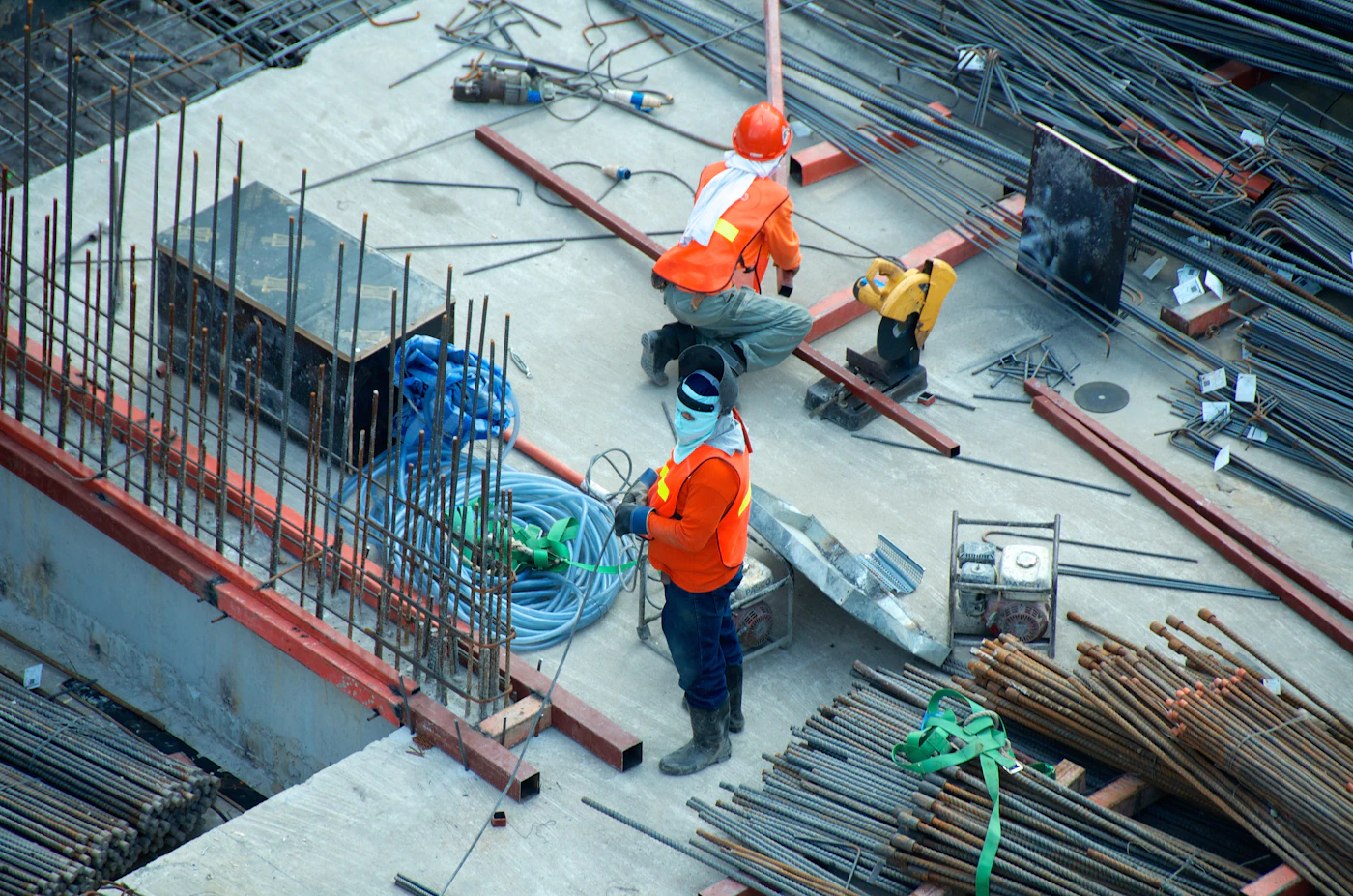
Say a framing carpenter starts a new job on a residential build. Day two, no harness available, no anchor point rigged, open edges along the second floor. He steps on a surface that gives way and falls to the subfloor below, fracturing his wrist and two vertebrae. His employer gets cited by OSHA. He files a workers’ comp claim. Most people at that point assume the citation helps automatically. It does, but how it helps is more specific than most workers realize.
(Illustrative example. The pattern above reflects a common factual scenario documented in OSHA enforcement records, not a specific individual case.)
To get value from a fall protection citation in a claim dispute, you need to understand how persistent these violations are, which industries see them most, what the injuries actually cost, and what the employer was legally obligated to do before anyone got hurt.
Fall protection citations: a 13-year streak at the top
According to EHS.com, OSHA’s Fall Protection Standard has ranked as the single most cited workplace safety standard among U.S. employers for 13 consecutive years. In 2023, inspectors issued 7,271 violations under this standard, accounting for 24% of all violations across OSHA’s entire Top 10 list. No other standard comes close.
This matters for workers’ comp because it changes how the citation reads. Fall hazards are not a niche problem at unusual worksites. They are endemic. When an employer gets cited after a fall injury, the record does not describe some isolated lapse. It places the employer inside a pattern of neglect OSHA has been documenting in the same industries for over a decade. A citation tied to a 13-year-running violation category is harder for a carrier to dismiss as a one-time accident than one pulled from an obscure standard.
What gets cited, and where the violations concentrate
The Fall Protection (General) standard tops the list every year. According to ClickSafety and EHS.com, Ladders, Scaffolding, and Fall Protection Training also appear on the Top 10 annually, and together they account for nearly half of all violations on the list.
The concentration goes further. Within the General Requirements standard alone, the five most cited individual requirements accounted for nearly 97% of all citations issued under it in 2023. The violations are not scattered across obscure sub-requirements. Unguarded edges. Missing guardrails. No anchor point. Workers on elevated surfaces with nothing in place at all. Same failures, year after year.
If the OSHA investigation cites your employer after your fall, the citation almost certainly addresses a specific, documented duty that went unmet. A citation is a government agency’s written finding that a legal obligation existed and was not met at the time you were injured. That is not the same as an administrative fine. It is the difference between an employer saying "this was unforeseeable" and a record showing a federal inspector found the hazard and named the specific rule that required it to be addressed. The OSHA violations practice page explains how that distinction plays out in workers’ comp proceedings.
The financial scale of a fall injury
According to OSHA’s Safety Pays calculator, as reported by EHS.com, a fracture injury from a fall carries estimated direct costs of $54,856 and indirect costs of $60,341, totaling $115,197. Those figures cover basic medical and wage replacement. They do not account for spinal fractures requiring surgery and months of physical therapy, or a head injury that changes how someone thinks.
EHS.com describes the long-term financial consequences of serious fall injuries as literally incalculable. A worker who sustains permanent disability after a fall from elevation faces income loss over years or decades that no initial benefit calculation captures. Workers’ comp benefit formulas do not change based on employer fault in most states. But the gap between what the system pays and what the injury actually costs is real, and establishing the employer’s specific compliance failure becomes more consequential the more permanent the damage.
For claims involving lasting impairment, the link between the employer’s failure and the documented disability outcome is what a permanent disability evaluation needs to build on.
Where fall protection citations concentrate by industry
According to Safety+Health Magazine, fall protection training violations are concentrated in roofing, framing, and residential remodeling specifically. Across construction broadly, Jackson Lewis reports that one in five construction citations over the past decade has been for inadequate fall protection.
These trades employ a large share of workers classified as subcontractors or day laborers at smaller companies with limited compliance infrastructure. Training violations in these settings often go alongside gaps in injury reporting. A workers’ comp claim may arrive already short on documentation. An OSHA citation issued after the injury can fill some of that gap, establishing that the hazard existed, that it was the employer’s responsibility to address, and that the employer had notice of that obligation.
For a broader picture of how OSHA citations across all the major standards affect claim outcomes, the top reported OSHA violations breakdown covers the full list.
What employers were legally required to have in place
Under OSHA standards, as described by Valent Group, employers must provide guardrail systems, safety net systems, and personal fall protection systems, along with safe work practices and training. The standard also requires employers to identify fall hazards first and determine the best method of protection before putting controls in place.
That sequencing is important. Buying harnesses and leaving them in a storage area does not satisfy the obligation. The standard requires an active process: identify the hazard, select the control, implement it, train the workers. A citation after a fall injury typically reflects the failure of one or more of those steps. That specificity is what matters when a workers’ comp carrier argues the injury was the worker’s fault rather than the result of a preventable gap in the employer’s safety program.
The Complete Workers’ Compensation Guide covers how OSHA inspection records are obtained and used in a contested claim, including how the citation record interacts with the carrier’s investigation.