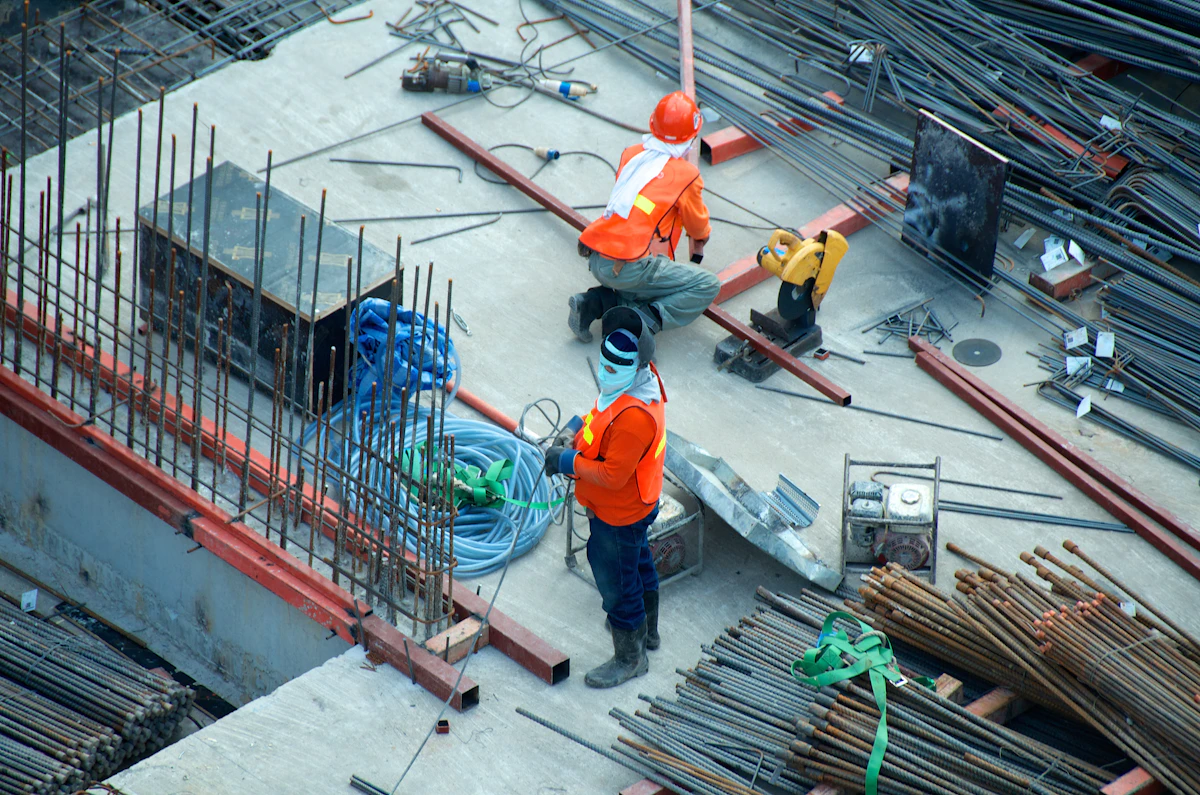
Workers compensation claim data, aggregated across the BLS Survey of Occupational Injuries and state fraud bureau reports, consistently identifies five categories of workplace hazards that produce the majority of claims. Understanding which hazards are most likely to cause injury lets workers focus their pre-shift attention, document appropriate precautions, and identify when an injury’s mechanism fits a well-established pattern that workers comp will recognize.
1. Falls from elevation
Falls from ladders, scaffolds, roofs, and raised work platforms cause roughly a third of all construction fatalities and produce thousands of non-fatal workers comp claims annually. Fall protection regulations (29 CFR 1926.501) require guardrails, safety nets, or personal fall arrest systems above six feet in construction. Violations of this standard lead OSHA's top-cited list every year. For injured workers, a fall-from-elevation claim usually accepts straightforwardly if medical records document the mechanism and any contributing equipment failures.
If your fall involved a defective ladder, scaffolding provided by a general contractor, or improperly assembled elevated platform, there may be a third-party claim against the equipment manufacturer or site controller in addition to the workers comp claim. Photograph the fall area and defective equipment before any remediation occurs.
2. Slip, trip, and same-level falls
Same-level falls, slipping on wet floors, tripping over cables, losing footing on icy surfaces, produce 20-25 percent of workplace injuries requiring lost workdays. Winter produces a disproportionate share via ice-related falls. Most of these claims are compensable when they occur on employer premises, though the “premises rule” creates contested cases at the edges (parking lots, approach sidewalks, client site visits).
The contested-edges issue is worth knowing in advance. Employer-controlled parking lots typically count as premises; public sidewalks adjacent to the workplace typically do not. Client site visits follow a going-and-coming analysis that varies by state. If the fall occurred at a location other than the main workplace, document the business purpose of being there before leaving the scene.
3. Contact with objects or equipment
Being struck by falling objects, caught in machinery, or pressed against equipment causes roughly 15 percent of workplace injuries. Machine guarding violations (29 CFR 1910.212), lockout/tagout failures (1910.147), and inadequate personal protective equipment underlie most of these incidents. The injuries range from minor lacerations to amputations and crush injuries. Documentation of missing guards or improper procedures strengthens both the workers comp claim and any third-party claims against equipment manufacturers.
Request a copy of the OSHA incident investigation report through the employer's safety officer or, if the incident triggered an OSHA inspection, through a public records request. OSHA investigation findings become particularly valuable if the employer knew of a guarding defect and failed to correct it, that pattern supports maximum medical improvement disputes and, in some jurisdictions, a claim for intentional act damages outside the exclusive remedy bar.
4. Repetitive stress and ergonomic injuries
Cumulative trauma, carpal tunnel syndrome, rotator cuff tears, chronic low back pain from repetitive lifting, develops over months or years rather than from a single incident. These claims are compensable in every state but are harder to prove than acute injuries. Medical documentation linking the condition to specific work activities is essential. Jobs with high repetitive task volumes (warehousing, assembly, healthcare patient handling, data entry) produce the bulk of these claims.
The legal standard in most states requires that work activities be “a contributing cause”, not the sole cause, of the cumulative trauma condition. Workers with pre-existing degenerative conditions can still succeed if their work accelerated or aggravated the condition. The treating physician's opinion on occupational causation is the single most important document in a repetitive stress claim. Establishing care early, before any formal claim, creates a cleaner medical record without the adversarial-IME dynamic that dominates later-stage claims.
5. Chemical and environmental exposure
Occupational exposure to hazardous chemicals, extreme temperatures, noise above OSHA action levels, and confined-space atmospheres causes long-latency injuries and illnesses that often don’t manifest until years after exposure. Hazard Communication violations (1910.1200), missing Safety Data Sheets, inadequate labeling, untrained workers, underlie most compensable chemical-exposure claims. Occupational asthma, hearing loss, chemical burns, and heat stroke are the most common outcomes.
Long-latency claims face a specific statute-of-limitations problem: the clock typically starts when the worker knew or should have known the condition was work-related, not when exposure began. For hearing loss, that often means the limitations period starts at the first audiogram showing significant loss. For asbestosis or silicosis, it starts at the first diagnosis. Documenting exposure through employment records, co-worker testimony, and safety data sheets from the period of employment is essential because contemporary records from that era may be difficult to obtain.
What to document before leaving any incident scene
Across all five hazard categories, the single most important post-incident action is contemporaneous documentation: photographs of the hazard condition, the names of any witnesses present, the exact location, the time, and any employer-provided equipment that failed or was absent. Incident reports filed with supervisors are part of the record but are controlled by the employer; a worker's independent photo record is not. Modern smartphones timestamp and geolocate photos automatically, which provides verification that cannot be altered after the fact. The pre-shift safety checklist covers the documentation habits that protect claims across all injury types before an incident happens.
How these hazards appear in Utah's employment landscape
The five categories above aren't evenly distributed across industries. Utah's specific employment mix, construction along the Wasatch Front, Silicon Slopes technology, healthcare through IHC and U of U systems, ski resort and outdoor recreation, produces distinct concentrations of each hazard type.
Falls from elevation dominate the Wasatch Front construction corridor, where UOSH has concentrated fall protection enforcement in the residential sector. For South Jordan and West Jordan construction workers, the practical significance is that UOSH inspection records after a fall incident are available through GRAMA request and frequently document the fall protection failures that caused the incident.
Slip and same-level falls affect the healthcare sector disproportionately, hospital corridors, patient care areas, and parking facilities of Intermountain Health and U of U Health facilities generate a significant share of Salt Lake Valley slip-and-fall workers comp claims. The premises rule analysis applies to employer-controlled property including healthcare facility parking structures.
Contact with objects arises in Utah's ski resort sector in ways that don't appear in national data: snowcat operators, lift mechanics, and terrain park equipment workers face struck-by and caught-in hazards specific to snow equipment and elevated infrastructure that can cause severe injuries outside the typical BLS industry categories.
Repetitive stress is the defining hazard for the Silicon Slopes technology corridor. The causation challenge, distinguishing occupational from personal computer use, is the central contested issue in Utah tech-sector cumulative trauma claims. Employment records showing hours worked and ergonomic workstation conditions are the essential early evidence in these claims.
Chemical and environmental exposure affects Utah's mining sector and, at lower levels, the construction industry through concrete cutting (silica) and renovation work (asbestos in pre-1980 structures). UOSH's silica standard enforcement has increased in the construction corridor, and silica citations are available through GRAMA requests for use in occupational disease claims.
Related reading
For the regulatory framework around these hazards, see our OSHA Violations practice page. For the documentation that supports any workplace injury claim, read A pre-shift checklist. For the full claims process, the Complete Workers Compensation Guide covers reporting through settlement.